

Introducing a Valuable Resource: Hidden Voices: Americans with Disabilities in United States History
By Shuko Tamao and Michael Rembis
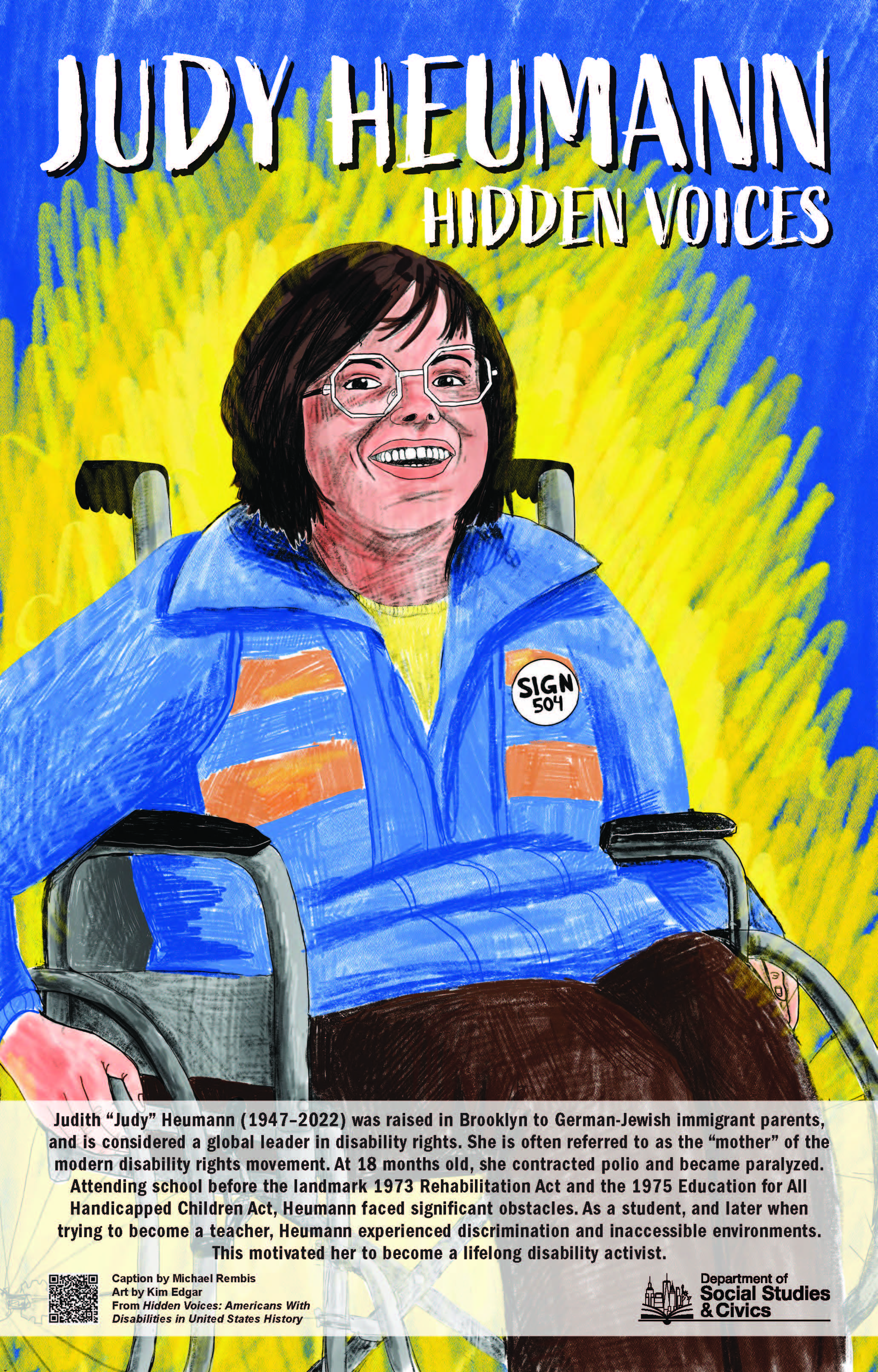
Hidden Voices: Americans with Disabilities in United States History (book link) is a remarkable achievement. Published by the New York City Department of Education, it is the product of more than two years of labor of over 35 people, including 15 authors. It provides K-12 teachers and learners with access to the profiles of 45 disabled Americans, as well as “Portraits of an Era” that enable students to situate those profiles within the broader context of disability history in the United States. The book, which is freely available as a downloadable PDF (book link), also contains two maps, a glossary, and numerous illustrations, photos, and primary documents, as well as other valuable tools, including connections to the curriculum, “Thinking About” questions, and lists of additional resources. The book is a powerful starting point for learners and teachers to meaningfully integrate disability and disabled people into the United States history curriculum.
Part of the appeal of Hidden Voices is its comprehensive approach. It shows learners that disabled people have been part of all aspects of American history since before the founding of the nation. Although they did not have a direct analog to the English word “disability” in their languages, Indigenous peoples had their own ideas about human body-mind difference that shaped their cultures and lived experiences. Europeans, in turn brought their own ways of thinking about disability to colonial America, which they inscribed into the laws and customs of the new United States. The violence of settler colonialism, enslavement, and an increasingly industrialized capitalist economy produced disability, as well. Hidden Voices touches on all these topics and provides students with the tools they need to pursue their interests.
An important part of disability history in the United States is the disability rights movement, which took place during the second half of the twentieth century and continues to shape politics in the twenty-first century. In the following section, Hidden Voices contributor, Shuko Tamao, writes about her experience writing the profiles for disability rights icons, Ed Roberts, Judy Heumann, and Brad Lomax. She writes about what motivated her to feature Roberts, Heumann, and Lomax and about the creative historical sources she used to produce the profiles.
Tamao writes: I believe learning history is about understanding people. When I was writing profiles for Hidden Voices, I wanted to bring lively accounts of disabled people that would pique readers’ imaginations and prompt them to put themselves in someone’s shoes. By creating engaging stories, I hoped readers would use their curiosity to cultivate empathy and become lifelong learners of history.
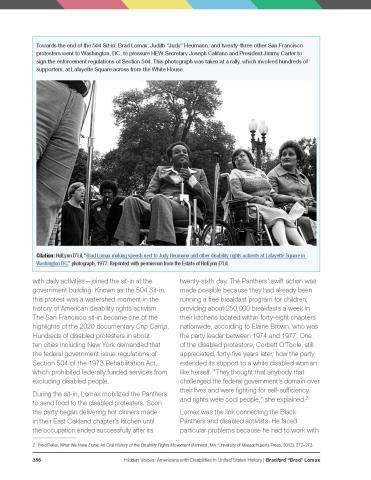
Because disabled people’s lives have been regarded as “hidden,” I wanted to connect these people’s stories with the more “well-known” history. For example, when I was writing about Edward Roberts, I spent considerable time explaining that young Roberts and many others like him grew up witnessing the achievements made by the Civil Rights Movement in the 1950s and 1960s. These disabled youths wanted to do the same for themselves by envisioning their own version of civil rights. When I was chronicling the life of Judy Heumann, I discussed her struggle to make her voice heard in the male-centric world, like many other women did during the second half of the twentieth century. When I was introducing Brad Lomax, a disabled Black Panther Party member who played a crucial role in making the 504 sit-in successful, I explained how disabled people of color faced double (or more) discrimination stemming from racism and ableism.
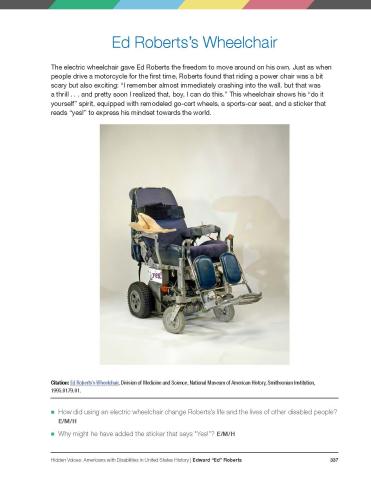
Oral history interviews, leaflets full of do-it-yourself spirit, photographs, political buttons, wheelchairs, grocery bags, and a sonification audio file—a scientific method that translates quantitative data into sound—are some of the primary sources I brought to Hidden Voices. I like introducing these non-text-based materials because, as an auxiliary to texts, they illustrate engaging stories of disabled people. Also, as a non-native speaker of English who struggled to keep up with reading assignments when I was in school, I have found non-textual information immensely helpful in connecting with the deeper aspects of the past. When I saw Ed Roberts’s wheelchair at the Smithsonian National Museum of American History, I felt it embodied his life and work. I thought that an object like this could tell a story worth hundreds of pages.
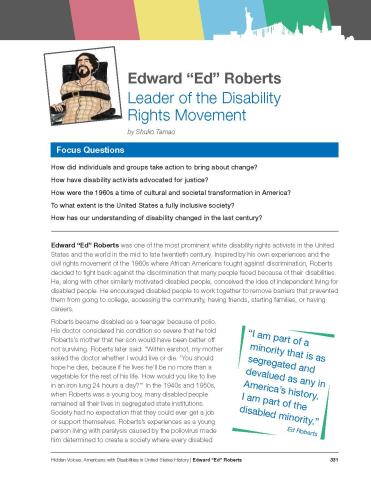
I wanted to give readers the same experience I had with Roberts's wheelchair. In his profile, I created a series of activities that analyze objects related to Roberts, prompting readers to identify his unconventional mindset. In one of the exercises, readers examine his wheelchair and answer questions like why he added a sticker that reads: “yes!” Through the activity, I hope readers learn to pay attention to details and to realize that this small sticker can symbolize Roberts's expansive, positive worldview, which made community living possible for many disabled people.
A memorable thing happened while I was writing Hidden Voices: I met Judy Heumann! In the summer of 2022, I was part of an acquisition effort of Heumann's papers, now available at the National Museum of American History (collection link). Other Smithsonian fellows and I went to Heumann's home in Washington DC to take inventory of her papers. Not only was I able to let her know about Hidden Voices, but I also had a hands-on experience of her leadership described in the documentary Crip Camp. Her 504 sit-in colleagues fondly remembered how Heumann asked them if they could stay one more day, and how she continued to do so until the end of the twenty-six-day occupation of the federal building in San Francisco. Forty-five years later, she asked me the same question: "Could you come back to my place tomorrow to work on my papers?" I felt like I was part of the history I had only imagined before, and I was fortunate to let her know that her story would be shared by many. When I think about her, I feel proud that I played a part in informing New York City's students about how fellow New Yorker, Judy Heumann, fought to make the city's schools more inclusive. And through Hidden Voices, her story can now be shared with students everywhere!
Conclusion: As this brief account of Heumann, Roberts, and Lomax makes clear, disability and disabled people played a fundamental role in shaping the most important episodes in American history, including the broad and diverse civil rights movements. Shuko’s experience writing the profiles shows that doing disability history can also be fun! Thinking about the stories that buttons, photographs, leaflets, wheelchairs, and other artifacts tell can be exhilarating for students and teachers. It shows that disability history is lived; it is not just written in institutional and government documents. Disability History is a social and cultural history, as much as it is a legal, medical, or political history. The stories of disabled people like Heumann, Roberts, and Lomax are not limited to their own embodiment or their own individual experiences. They, like other Americans, engaged with the world around them and some profoundly altered that world. They left behind lasting legacies that continue to shape American life. In that sense, disabled Americans are representative of all Americans — they come from numerous backgrounds, occupations, and social and geographic locations, and some achieve great things. Their history is American history. It is important for all students — not only those who may be considered disabled — to learn about and find role models in people like Judy Heumann, Ed Roberts, and Brad Lomax.
If you have any questions about the Hidden Voices project or about using it to teach disability history, please reach out to us, Michael Rembis (marembis@buffalo.edu) or Shuko Tamao (shukotamao@gmail.com). Please download the Hidden Voices book (book link). Use it in your classes! Share it with friends!
In solidarity,
Shuko and Mike
Image Credits
- Judy Heumann Hidden Voices Poster. Art by Kim Edgar. Caption by Michael Rembis. NYC Department of Social Studies & Civics.
- Harriet Tubman Hidden Voices Poster. Art by Sophie Furman. Caption by Michael Rembis. NYC Department of Social Studies & Civics.
- From profile of Bradford “Brad” Lomax, “Hidden Voices: Americans with Disabilities in United States History,” page 356.
- From profile of Edward Roberts, “Hidden Voices: Americans with Disabilities in United States History,” page 331.
- From profile of Edward Roberts. “Hidden Voices: Americans with Disabilities in United States History,” page 337.
View a presentation by Michael Rembis and Shuko Tamao on Hidden Voices to the Teaching Disability History Interest Group - September 17, 2026. To join the quarterly interest group, email Rich Cairn <rcairn@collaborative.org>.
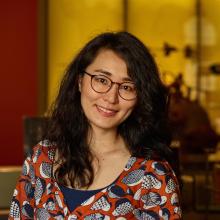
Shuko Tamao,
Library Specialist, University of Pennsylvania Libraries.
Shuko Tamao is a public historian who loves writing stories of disabled people using unique primary sources. Prior to her current position, she was a postdoctoral fellow at the Smithsonian’s National Museum of American History.
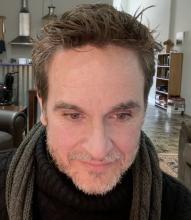
Michael Rembis
Michael Rembis is Professor in the Department of History and Director of the Center for Disability Studies at the University at Buffalo (SUNY). He specializes in 19th- and 20th-century U.S. history, disability history, mad people's history, and the history of institutionalization and eugenics. His most recent book, Writing Mad Lives in the Age of the Asylum (OUP 2024), was shortlisted for the 2026 Cheiron Book Prize. Rembis is a principle investigator on the Andrew W. Mellon Foundation funded Communities of Care Project (2023-2029).
